
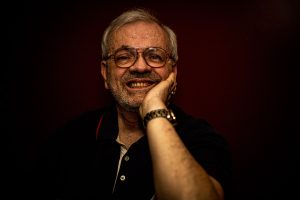
When Tom Osbourn collapsed in his Germantown home in September 2023, his blood sugar had spiked to an almost unimaginable level, 2,000 mg/dL. Alone and unconscious on the kitchen floor, Osbourn slipped into a two-week coma. Doctors put him on a ventilator and his family prepared for the worst.
“I really thought we were going to lose him,” said his sister, Alice Bridges. “He was in such critical condition. It was terrifying.”
His brother, Vince, was the one who found him after their mother sensed something was wrong.
“It was a shock,” Vince said. “He was unconscious, things were strewn across the floor. It didn’t look good. If Mom hadn’t insisted we check on him, he wouldn’t be here today.”
Osbourn’s recovery since then has been nothing short of remarkable. A retired mechanical engineer, Osbourn once drafted parts for hydraulic lifts help people with disabilities access swimming pools. That same spirit of ingenuity and persistence helped him fight through months of hospitalization and physical therapy.
“There were days I didn’t want to get up for therapy,” Osbourn said. “But I knew if I didn’t, I’d lose my chance at recovery. I had to push myself.”
After stints in acute care and skilled nursing, Osbourn arrived at Nazareth Home to continue his recovery. What began as short-term rehabilitation soon turned into something more. With the support of his care team and family, Osbourn made the difficult decision to sell his house and stay at Nazareth Home.
“It wasn’t easy,” Osbourn admitted. “But I knew I couldn’t risk going back to old habits, living alone and eating poorly. Here, I’ve got good food, great care, and people who are looking out for me.”
That peace of mind extends to his family.
“There’s such a sense of relief,” Alice said. “He’s safe, he’s cared for, and most importantly, he’s happy.”
Since embracing Nazareth Home as his new residence, Osbourn has become more engaged with the community.
“The therapists and staff here are incredible,” Osbourn said. “They make you feel like family. They motivate you, support you, and give you hope.”
Bridges believes her brother’s journey is a testament to resilience and the value of community-based care, something that has brought peace of mind to them both.
“It’s been a long road, but I feel good. I’m talking, I’m walking, and I’m living again. I can’t say enough about the people here, they’ve made all the difference,” Osbourn said.